
$7/hour · Catalog-readiness pilot
Ecommerce Product Data Enrichment Services
Turn incomplete supplier files and product records into structured, source-traceable, channel-ready catalog data. Acelerar's product data enrichment team researches missing facts, normalizes attributes, checks variants, prepares content, and returns exceptions for review without asking your team to scale manual catalog work.



Product Data Enrichment
What is product data enrichment?
Product data enrichment turns incomplete supplier and catalog inputs into complete, structured, source-traceable product records. A dedicated team researches missing facts, normalizes attributes, prepares content and images, links variants, and maps approved data to your storefront, PIM, or marketplace. Unsupported values stay in an exception queue instead of being guessed. The product data enrichment scope is approved at field level, so your team can distinguish accepted records, unresolved decisions, and work that belongs in an adjacent service at production scale.
From Raw Input to Approved Record
See what product enrichment changes inside the catalog
Ecommerce product data entry versus an enriched record
A raw supplier row might contain a SKU, a short title, one image, and a size written as 10 x 20. Ecommerce product data entry places those supplied values into the right fields. To enrich product data, the team researches approved sources, adds missing material and compatibility facts, normalizes the dimensions and units, connects the parent and variant, prepares factual copy, records the source, and flags anything that cannot be confirmed. The pilot output can show the supplied value beside the accepted value, the unit transformation, the evidence reference, the review status, and the destination field. That gives your team an auditable example of the work before approving full-catalog scope.
Compare ecommerce product data entry →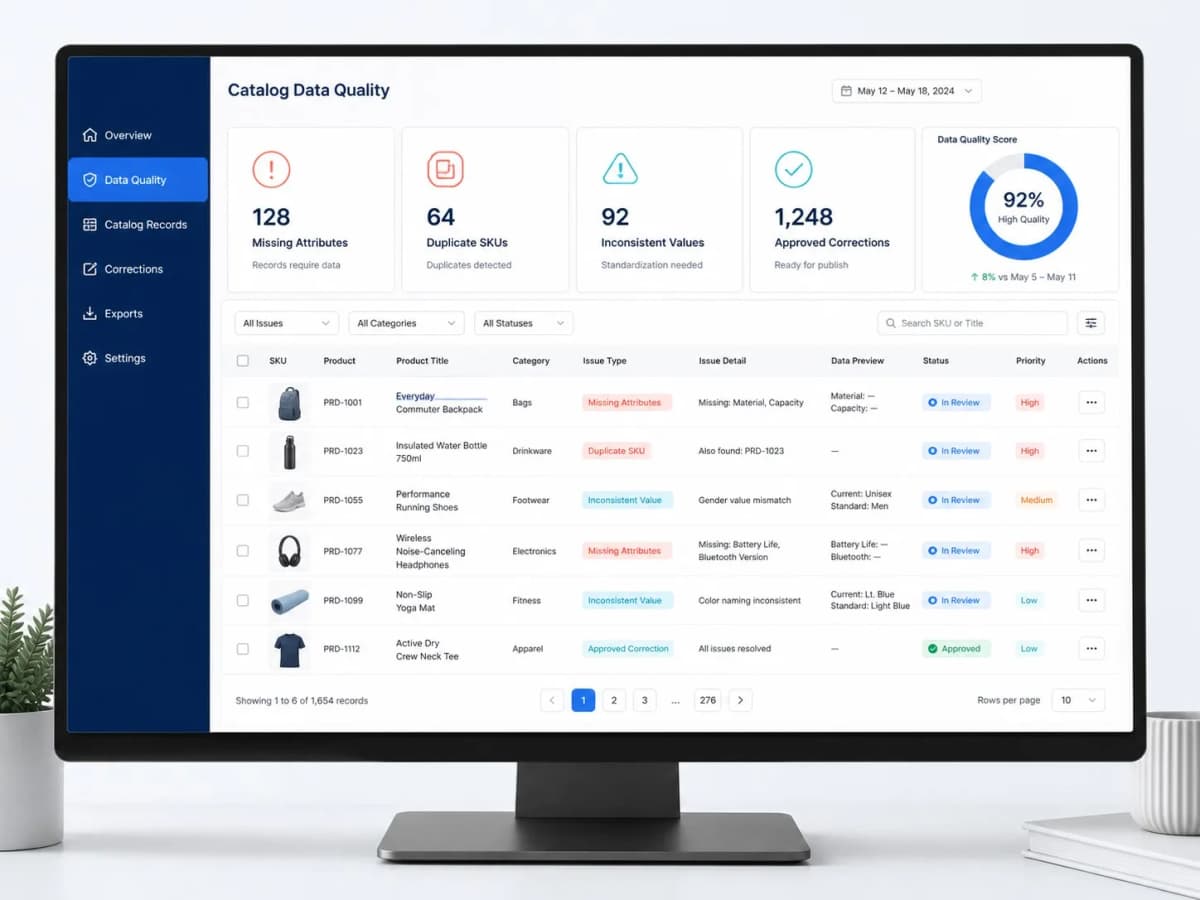
How approved fields reach an ecommerce product data feed
An ecommerce product data feed transmits approved product information to a channel. Enrichment happens before that handoff. We map the required fields, allowed values, units, images, titles, and variant rules for each destination, then return a validated file or work inside your approved system. Ecommerce product examples in the pilot show exactly which fields changed and which records still need a decision. A storefront, marketplace, and Google Merchant Center can require different structured attributes from the same master record. The field map documents those differences so accepted product information can be transformed for each approved destination without turning ongoing feed syndication into an implied part of the enrichment scope.
See product upload services →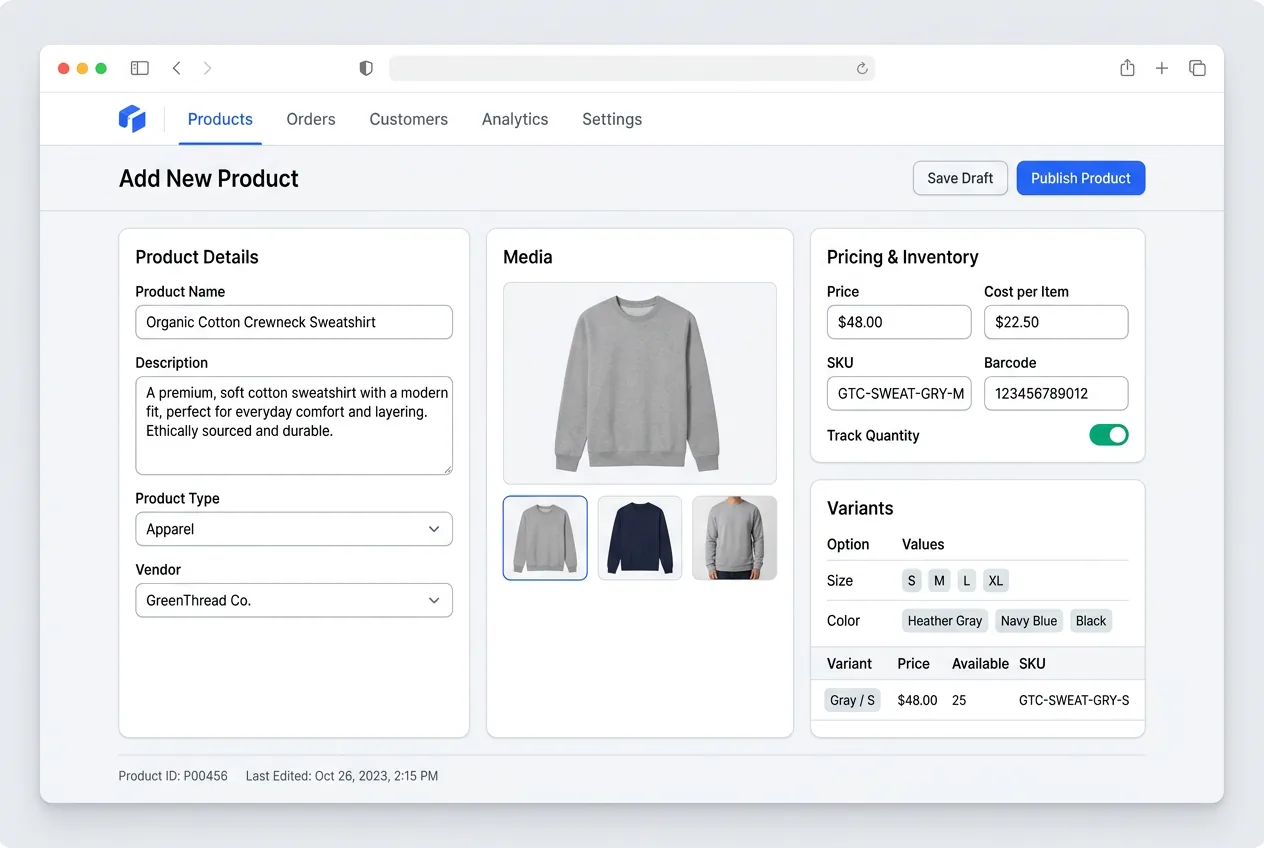
Product enrichment with sources, confidence, and exceptions
Product data enrichment services should show where researched values came from. We agree on a source hierarchy, such as your internal master data, manufacturer documents, approved supplier files, and authorized databases. When sources conflict or a field has weak support, the value enters an exception queue with its source, verification status, and review note. The team does not force a complete-looking record by inventing a fact. Where traceability is required, a researched field can retain the source document or URL, verification date, original text or value, normalized value, transformation applied, confidence or review state, and reviewer. Your team decides which fields need that evidence based on business risk.
See product data cleaning services →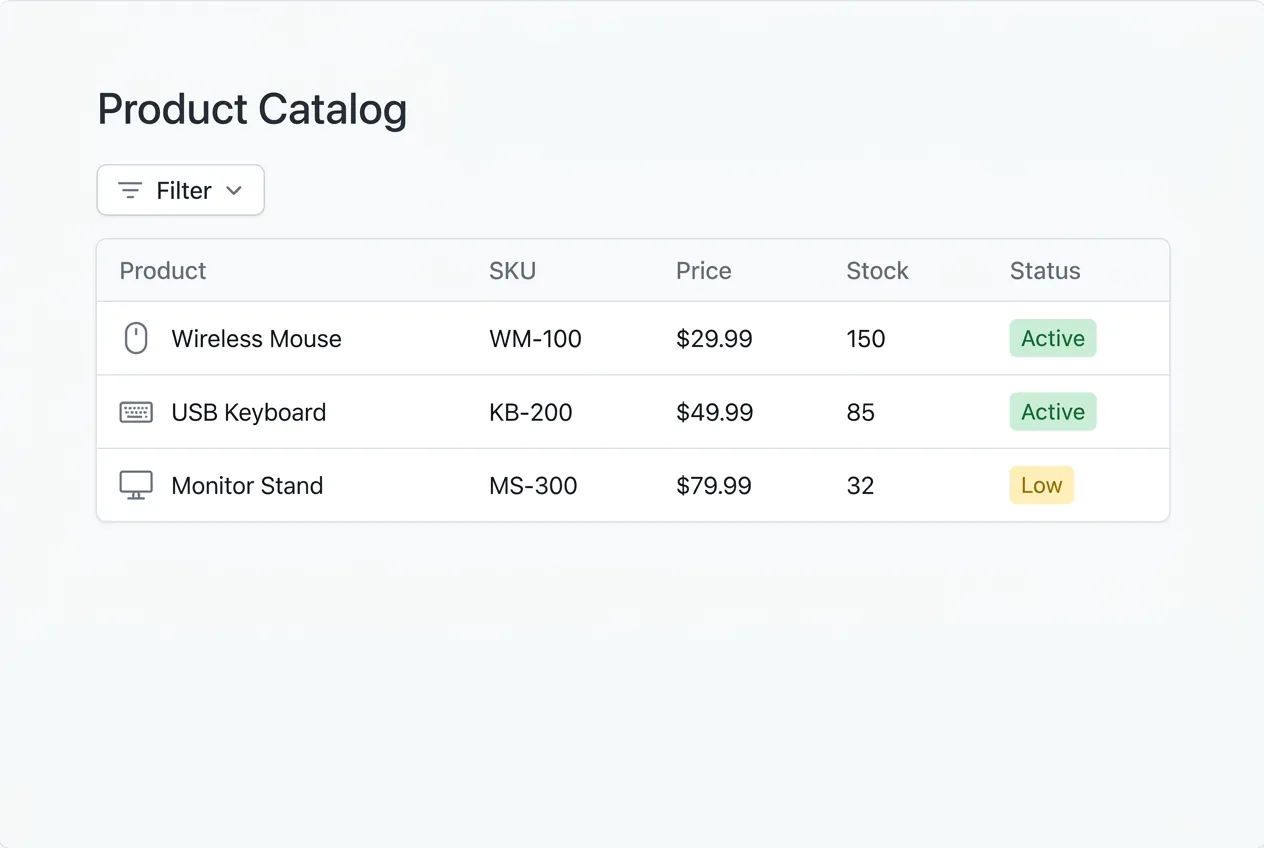
Ecommerce search enrichment needs usable attributes
Ecommerce search enrichment connects normalized product attributes to the search and filter rules your storefront actually uses. When a configured refinement depends on color, material, size, compatibility, or another missing value, that product cannot appear under the refinement until the field is supplied and indexed. The same structured attributes may support filters, product comparison, related-item rules, marketplace templates, and product schema when your implementation consumes them. We validate the record and mapping, while search behavior, indexing, merchandising logic, and channel performance remain controlled by the destination platform and its configuration. This page covers product-specific work. Broader ecommerce data enrichment for customer, order, or company records is a separate scope.
See catalog management services →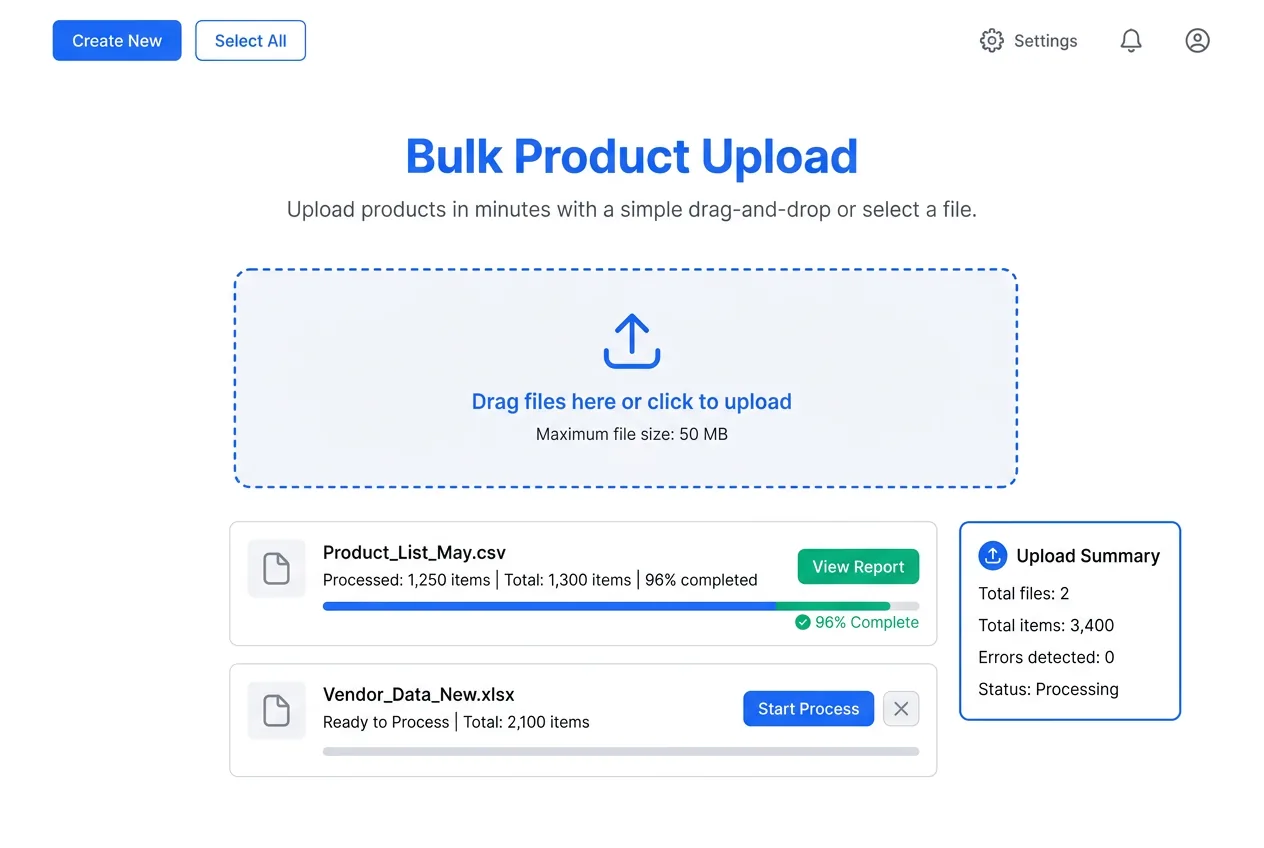
Keep Each Catalog Job Clear
Related product data services
Use the right workflow for identity, taxonomy, copy, and field quality instead of treating every catalog problem as enrichment.

Product Data Matching
Determine whether records from different sources represent the same product, then build approved crosswalks.

Product Data Classification
Assign products to an approved taxonomy and apply category-specific labels, tags, and allowed values.

Product Description Writing
Create factual, brand-aligned product copy from approved specifications and source material.
Managed Enrichment Scope
What ecommerce product data enrichment can include
Attribute and Specification Completion
Research and add approved dimensions, materials, compatibility, certifications, ingredients, technical specifications, and category-specific fields. Units and value formats follow the agreed dictionary. Required attributes can vary by product family, locale, and destination, so completeness is measured against the approved schema rather than one universal field list.

Descriptions and Media Metadata
Prepare factual titles, descriptions, bullets, image names, alt text, and media requirements from approved sources and brand guidance. Generated content receives factual and style review before delivery, with restricted claims, required terminology, length limits, and destination rules documented in the content brief.

Variant and Identifier Integrity
Protect SKU, GTIN, MPN, bundle, multipack, parent-child, size, color, and compatibility relationships. Variant-specific facts stay attached to the correct child record instead of leaking across the family. Ambiguous identity issues are routed to product matching or buyer review.

Taxonomy and Allowed Values
Map products to the approved category structure and normalize values used by filters, feeds, storefront search, PIM workflows, and marketplace templates. Category-level dictionaries define required attributes, allowed values, formatting, and fallback behavior so the structured output remains consistent across batches.

Field-Level Provenance
Retain the source and review status for researched fields when the engagement requires traceability. Conflicts and unsupported values stay visible instead of being silently overwritten. Provenance can be delivered at field level for high-risk data and at batch level where lighter evidence is appropriate.

Channel-Ready Handoff
Return the accepted output in your agreed CSV, spreadsheet, PIM, ERP, store, or marketplace format, with an exception file and batch-level QA summary. The handoff can include mapped headers, import-ready values, source references, review states, and the acceptance scorecard used to approve the batch.
AI-Native, Expert-Managed
Use automation for volume and people for judgment
The workflow assigns each field to a rule, a source, and a review path. Automation can speed up first-pass work, but it does not get permission to invent missing product facts.
Detect and Transform
Automation can identify empty fields, extract text from approved documents, normalize units, prepare image metadata, and suggest category or attribute mappings.
Check Against Rules
Required fields, allowed values, identifier formats, variant rules, and channel templates are checked before records move into the accepted batch.
Escalate Ambiguity
Trained specialists review source conflicts, low-confidence values, safety or compliance fields, and copy that needs factual or brand approval.
No forced completion. Records pass documented QA under a 99.5% accuracy SLA. Values that cannot be supported remain in the exception queue for a decision.
Service Boundaries
Enrichment, matching, cleaning, entry, and feeds solve different problems
| Activity | Question it answers | Typical output |
|---|---|---|
| Product data entry | Has a supplied value been placed in the required field? | Populated catalog fields |
| Product matching | Do these records represent the same product? | Approved matches and crosswalks |
| Product data cleaning | Is an existing value correct and consistently formatted? | Corrected and normalized values |
| Product classification | Which approved category and attribute set applies? | Taxonomy and category mapping |
| Product data enrichment | What verified information is missing, and how should it be added? | Complete, source-traceable record |
| PIM or product feed | How is the approved record governed or sent to a channel? | Managed source of truth or transmitted data |
Transparent Starting Rate
Dedicated product data enrichment support
- Representative catalog-readiness pilot
- Approved field map and source hierarchy
- QA summary, provenance, and exception file
How It Works
From catalog sample to accepted enrichment workflow
Sample
Share a representative set of records, sources, target fields, product families, destinations, and known edge cases. Include both typical items and difficult records so the pilot reflects the catalog work your production team will actually face.
Define
Agree on the category schema, field dictionary, approved sources, confidence rules, acceptance tests, and exception ownership. Separate required, optional, and high-risk attributes, then document allowed values, unit standards, brand rules, and destination-specific constraints.
Enrich
Research missing information, normalize values, prepare content and media metadata, and preserve variant relationships. Each researched field follows the approved source order, while the working record retains the evidence and transformation needed for review.
Review
Run automated checks and human QA. Route unsupported values, source conflicts, and identity questions to the exception queue. Reviewers resolve what the evidence supports and leave buyer-owned decisions visible instead of forcing completion.
Validate
Test the pilot against required-field coverage, valid-value rate, sampled accuracy, variant integrity, and destination rules. The scorecard records passes, failures, exceptions, rework, and accepted records so both teams can decide whether the workflow is ready to scale.
Scale
Use the accepted pilot to set batch size, team capacity, turnaround, reporting, and one-time or ongoing production scope. For ongoing work, agree on new-SKU intake, supplier corrections, taxonomy changes, certification review, freshness checks, and the records that require revalidation.
Start with a catalog-readiness pilot
Send a representative SKU sample with difficult variants, missing fields, conflicting sources, unusual units, and destination templates. We will scope the rules and return enriched records, provenance, QA results, and unresolved exceptions so you can approve the production plan with evidence.
Scope My Catalog PilotFit the enriched record to your ecommerce stack
Our teams are trained on the platforms you already use.


Related ecommerce operations proof
“We moved our website across to Shopify and totally revamped it, adding thousands of SKUs which Acelerar completed flawlessly.”
“Acelerar handled our entire catalog migration (50,000+ SKUs) without a single missed deadline.”
“We have depended on Acelerar to do a number of projects for us over the last few years. Everything they do for us is timely and exactly what we requested. I would highly recommend.”